

An Overview of the Chemin D’Arles/Via Tolosana
From Arles to the Pyrenees
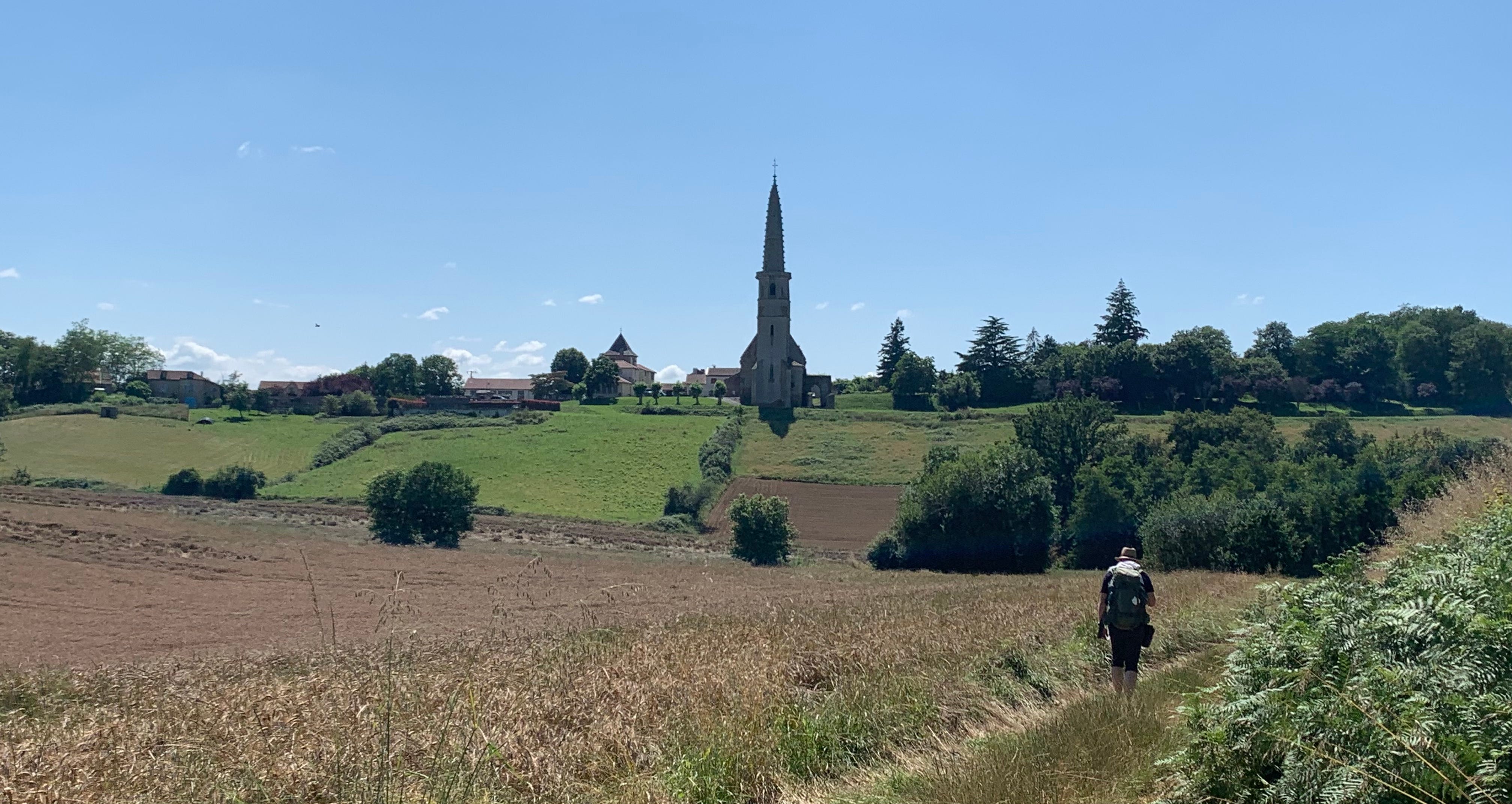
The Via Tolosana, also known as the Chemin d’Arles, is one of the main pilgrimage ways through France leading to Santiago de Compostela. It begins in Arles, France and continues around 800km to the Somport pass over the Pyrenees where it then links up with the Camino Aragonés in Spain.
While the Le Puy and Vezelay ways in France are the more popular Camino hiking routes, the Via Tolosana (GR 653) should definitely not be overlooked. This route is perfect for anyone who enjoys a quieter hiking path with a varied landscape and still rich pilgrimage history. Passing through the Carmargue, Haute-Languedoc, Lauragais and Gers regions of southern France, pilgrims on this way get a taste of varied French cuisine, charming gîtes, and beautiful countryside. It passes through mediterranean landscapes, craggy mountains, historic medieval villages then alongside the Canal du Midi into Toulouse, before turning south to enter the Pyrenees.
We didn’t have enough time to start in Arles (though I love this town and highly recommend starting here.) We had four weeks in total. Since we didn’t want to miss walking in Spain, we began in Montpellier and had to skip the Canal du Midi section leading into Toulouse. Stupid, in retrospect, because that is the flattest and easiest part of the whole way! You could walk from Arles to the Somport pass in 4 weeks, but would need at least five to continue on the Aragonés Camino.
I wouldn’t recommend this route for first-time pilgrims, unless you’re already a very seasoned hiker used to managing your own way. Finding food in the first week in the rural mountains was a bit tricky a few times, requiring us to carry breakfast, lunch and dinner for the next day at times. But we never had a problem finding a place to sleep at night and the way is very well supported with pilgrim gîtes and small hotels.
Budget: It’s more expensive than Spain. A bed in a gîte typically costs 15-20€ per night. Half board with dinner and a simple breakfast could add on another 15-20€. HOWEVER, the quality of dinners in these gîtes is incredible. Much higher standards than your classic pilgrim menu in Spain. Honestly, it shocked me how good the food was, so that extra 15€ for dinner was 100% worth it every time. We never had a bad meal in France.
Food + Planning: Be aware that often on Sundays and Mondays every grocery store or restaurant in many small villages will be closed. This gave us a moment of panic a couple of times when we realized we hadn’t planned our food properly. However — often many of these little towns have a pizza truck that drives through on Sundays/Mondays. Brilliant marketing strategy and definitely saved our hungry stomachs a few times. French bakeries are often a godsend too, where we could stock up on quiche or pizza slices for lunch and of course, eat pastries in the morning!
Guidebooks: The best guidebook is the Miam Miam Dodo guide. It’s only in French, however. It has the best maps and best info, hands down. I haven’t found a good English equivalent and the German guidebook we had wasn’t nearly as good as Miam Miam Dodo. Would recommend carrying this and making friends with Google Translate.
People: Most of the people we met walking were French retirees. Some were hiking all the way to Spain, others to Lourdes, and some were just hiking for a few days. It’s a very quiet route. We met just 26 other people in 4 weeks of walking. So if you don’t like solitude, I don’t recommend this route. (Or go with a friend!) That said, the people we did meet in the gîtes were lovely and it still had very much a “Camino feeling” sharing meals or hanging out with other pilgrims. If you know French, you’ll have a big advantage of course!
Safe for solo women? Totally. I would have felt very safe doing this on my own. But again, I would really only recommend it if you’re a seasoned hiker or have done other Camino routes. And if you can handle solitude for long stretches!
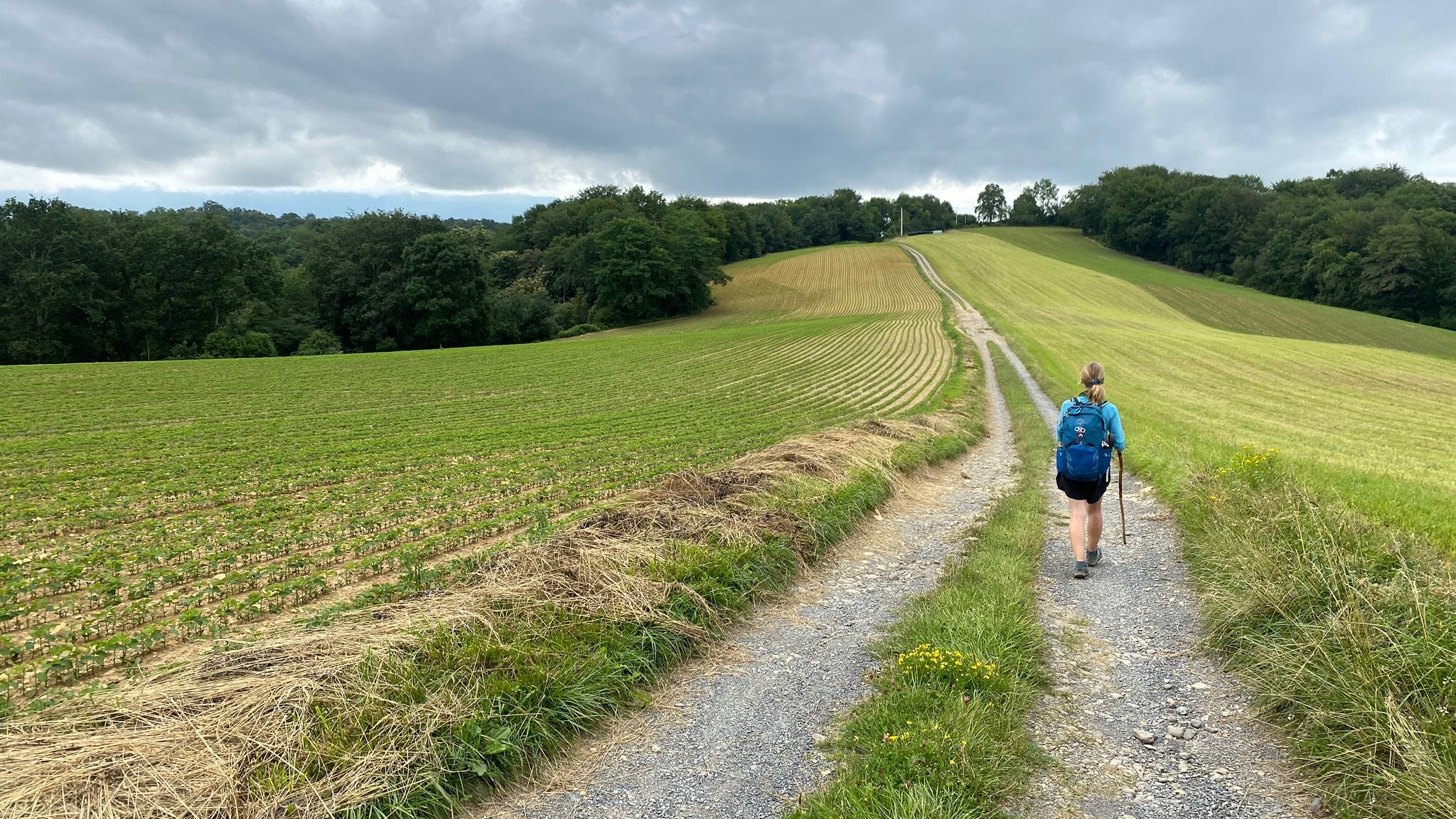
Highlights for me:
The gîtes. We stayed in some obscenely cute and charming gîtes often with fantastic meals. Because there are fewer people on this route, often we had the gîtes to ourselves or with a couple of other people.
French Food. When we got a good home-cooked meal or found a restaurant/bistro, the food was always incredible! Eating your way through France is always a good idea.
The Solitude. It was nice to have the road to ourselves so much. It also made it very jarring when we linked up with the Camino Francés aka Pilgrim Highway in Puente la Reina.
Historic villages. There were a lot of really beautiful, medieval villages. I particularly loved Marciac, home to one of Europe’s most famous Jazz festivals, St-Guilhem-le-Desért and Selvatet-sur-Agout.
Lowlights:
Weather. We had bad luck with the weather. It was one of the rainiest Junes on record, so we had a LOT of mud and thunderstorms more days than not. The weather totally changed crossing over the Pyrenees into Spain, where it was suddenly sunny and dry for the rest of the way!
The quality of the paths. The paths are not nearly as well maintained as in Spain. Often you’ll walk through very high grass. And when it’s been raining, well, mud and soaked shoes are inevitable. In summer it was also peak tick-season, so we were constantly brushing off ticks from all the high grass. Often we used Google Maps to route us onto country roads in order to pass through more villages for food and also to avoid the overgrown paths.
Finding food. This is not a Camino where you have the option to have a coffee or a snack in a bar every few kilometres. The first week through rural mountain villages made finding food a bit difficult at times. We had to carry more food which of course, adds more weight to your backpack. Not ideal!
Tips and Good-to-Knows:
Don’t be afraid to go off the traditional GR route and take country lanes to get from A to B. The route is designed to be as much in nature as possible and avoid villages/services. So going off script can be a good idea sometimes!
Plan your food carefully, especially in the rural mountain region between Montpellier and Castres.
Cemeteries almost always have public water.
99% of villages have public toilets. It’s amazing.
Many gîtes require you to check in and/or get the key from the local Mairie (town hall.)
As you leave Oloron-St-Marie, you might get a strong whiff of chocolate wafting around the streets. If you go just a few hundred metres off the Camino, you’ll find a Lindt Chocolate factory! With the biggest shop and selection of chocolate I’ve ever seen — heavily discounted. Since chocolate makes excellent pilgrim food you should definitely stop by!
My favorite gîtes:
Maison Saint Elie in St-Guilhem-le-Desert - The Abbey has been serving pilgrims for hundreds of years and the pilgrim gîte is a complete gem. Very cozy and a gorgeous little courtyard garden. Just make sure to arrive in time! (Between 16:00 - 17:30.)
Municipal Gîte in Barran - You get the keys at the Mairie. It’s a converted studio in an old building with just 4 single beds, one bathroom, and a basic kitchen. It’s so cute, bright, and cozy with a new water fountain built outside for pilgrims.
Le Grangé in Giscaro - The French/German couple welcome pilgrims to their lovely farmhouse. Very cozy beds in various nooks, a comfortable, colorful living room with a wonderful dinner and breakfast served. Very friendly hosts make you feel right at home.
Gîte St Jacques in Selvatet-sur-Mare - It’s a small gîte located over 2 floors in the centre of the old town. Only six or seven beds in rooms of two, with several bathrooms and a kitchen on site if you want to cook.
Gîte Municipal in Anoye - This little gîte is located upstairs in the Mairie. This former apartment has two rooms with several bunks, a living room, and little kitchen. There’s an on-site tiny grocery store below that opens for pilgrims for exactly 30 minutes everyday, from 6-630pm. It’s the only shop in town but has everything you need for a hearty self-made, easy dinner and breakfast/lunch fixins for the next day. Very friendly locals and a beautiful spot.
My stages:
Day 1 Montpellier - Saint-Guilhem-le-Desért - 22km
Day 2 St Guihelm - St-Jean-de-la-Blaquière - 22km
Day 3 St Jean de la Blaquière - Lodève - 15km
Day 4 Lodève - Le Bousquet-d’Orb - 23km
Day 5 Le Bousquet - St Gervais-sur-Mare - 24km
Day 6 St Gervais-sur-Mare - Murat-sur-Vèbre - 23km
Day 7 Murat-sur-Vèbre - La Salvetat-sur-Agout - 22km
Day 8 La Salvetat-sur-Agout - Boisset - 28km
Day 9 Boisset - Castres - 28km
Day 10 Train from Castres - Toulouse then Isle’Jordain to Giscaro 15km
Day 11 Giscaro - Montégut - 30km
Day 12 Montégut - Barran - 20km
Day 13 Barran - Monlezun - 30km
Day 14 Monlezun - Maubourguet - 24km
Day 15 Maubourguet - Anoye - 23km
Day 16 Anoye - Pau - 27km
Day 17 Pau - Oloron-St-Marie - 32km
Day 18 Oloron-St-Marie - Sarrance - 21km
Day 19 Sarrance - Urdos 22km (5km on a bus between Borce - Urdos because the road was closed)
Day 19 Urdos - Canfranc - 26km (crossed into Spain and continued on the Camino Aragonés)
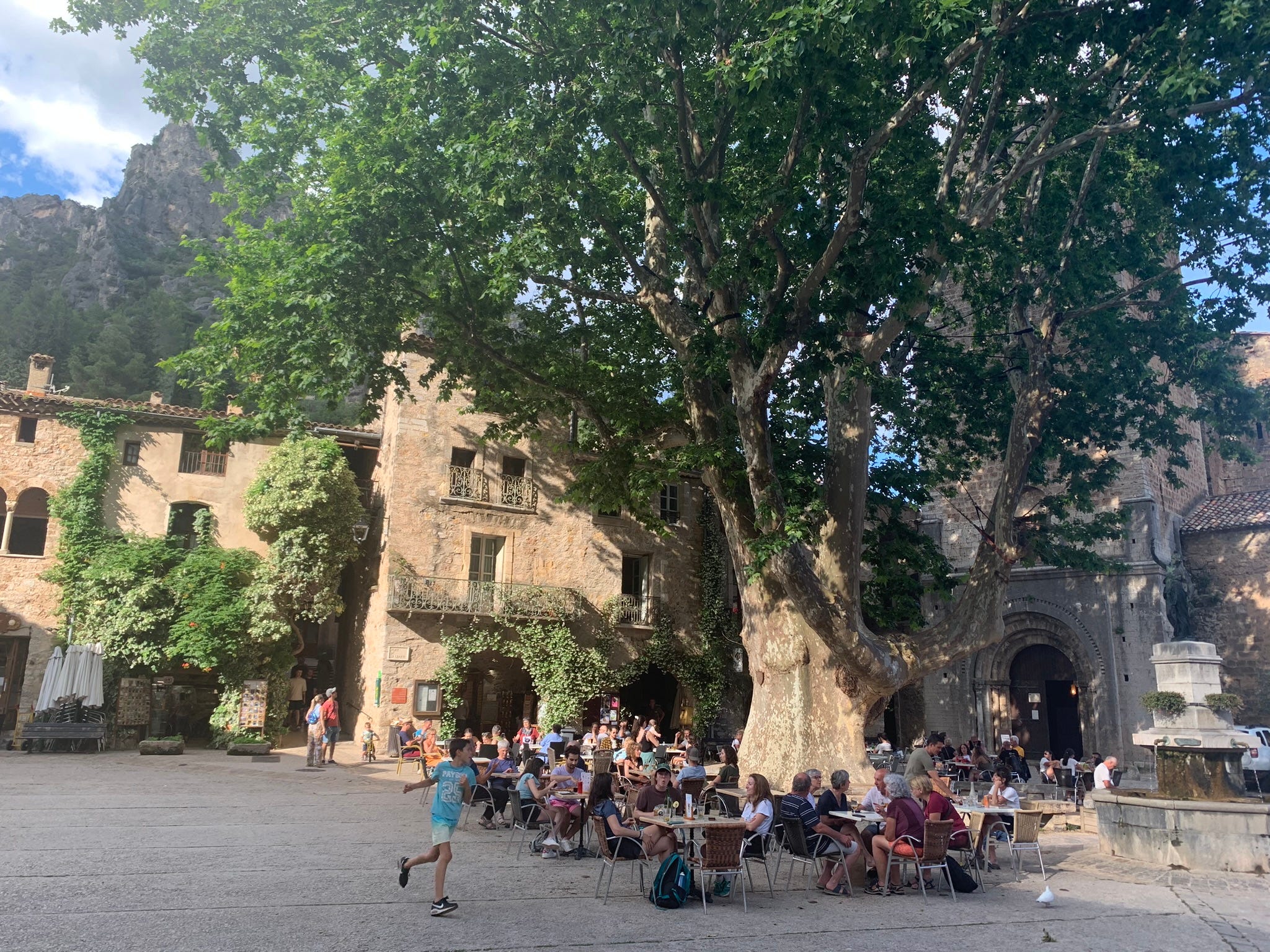
Overall, it’s a challenging route but definitely worth it! And a beautiful way to experience Southern France on foot.
I’m starting to plan a short section of the Via Tolsana and I’d love your input. Your blog of the route is amazing! I was thinking of Montpellier to Toulouse, but I only have 11 days and would prefer to keep the days closer to 20 km if possible. I’m flying out of Toulouse so could walk beyond there to Pau, skip sections, etc. Do you suggest one section(s) over others? We walked the Frances in May 2025, our first camino. Thanks!
Great overview! I did the Camino del Norte and Camino Primitivo to Santiago in 2019 but am always curious about other routes. Sounds like an incredible way to experience southern France. 😌